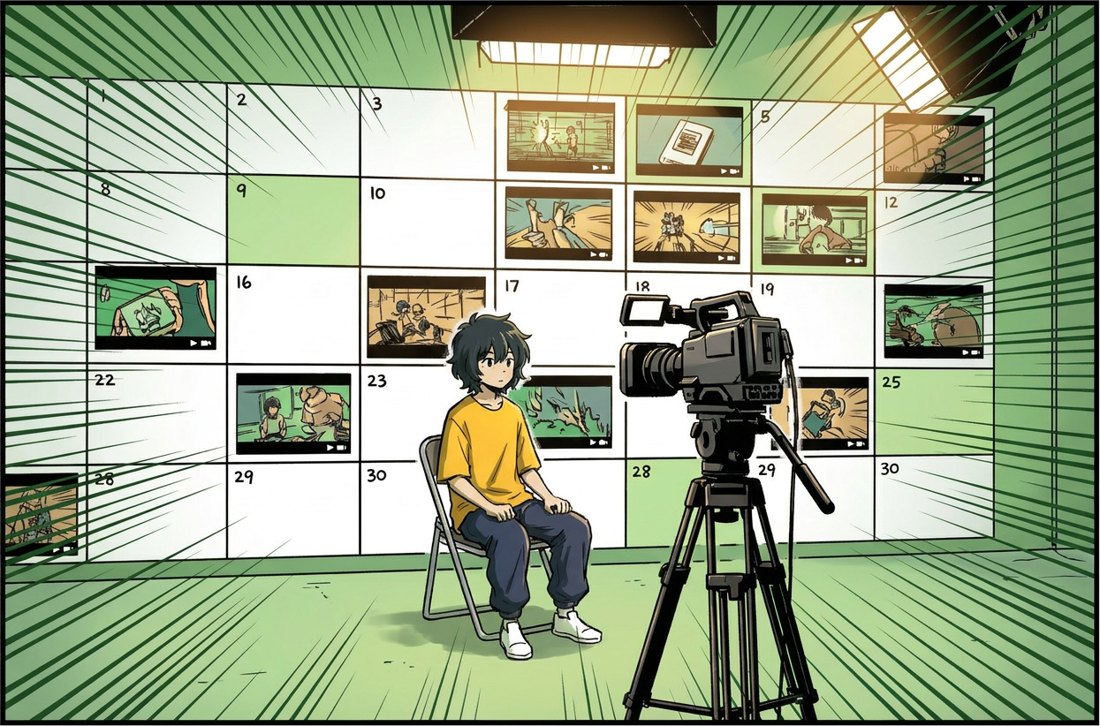
Gary Vaynerchuk's model was one pillar piece of content turned into thirty derivatives. He calls the original pillar content. I call it source content, because everything downstream is a derivative of the source. The question a business should be asking is not how many pieces can be squeezed out of a recording. It is what one production day honestly produces before quality starts falling off.
The model
One source recording, a podcast, a live show, or a long-form video formatted for it, gets split along four lines: video, written, image, and audio. From those four lines come the actual formats.
- Video: the full episode, mid clips of three to seven minutes, vertical shorts under ninety seconds
- Written: LinkedIn posts, X posts and threads, a newsletter issue, a standalone article
- Image: quote cards, stat cards, carousels that walk through a framework
- Audio: the podcast feed, if you run one
- Paid: hooks, demonstrations, and calls to action, but only if they were shot on purpose during the session
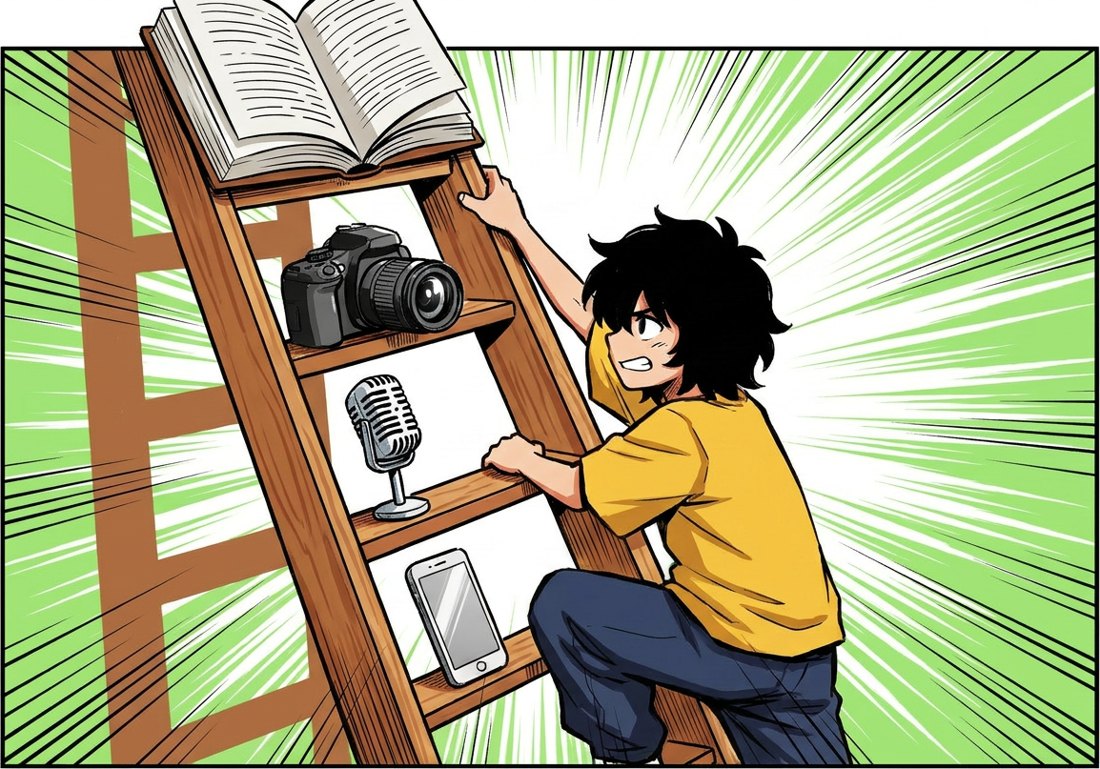
Every one of those is a rung on the content ladder, and every rung has its own job. The source feeds all of them at once. That is why one good session can carry a month.
What one session actually yielded
Two real engagements, two very different yields.
CYFT. One planned, remotely directed three-hour shoot with a prepared run of show. Output: one full podcast, 19 podcast clips, eight reaction clips, seven ads, and 16 static graphics. Fifty derivative pieces plus the episode itself. That is deliverable proof, not results proof: views and leads were not tracked on that engagement, so I do not claim them.
Point Blank. Four weekly one-hour shows, roughly four hours of source programming in the month. Output: about twenty vertical videos across the month, against a target of four a week. One show alone produced nine usable videos. Those clips generated roughly 300,000 combined views in a month across Reels, Shorts, and TikTok, on channels that had been dormant.
One session gave fifty pieces. One show gave nine, and a quiet show gave two or three. The difference was never the length of the recording.
Yield depends on the source, not the math
A one-hour recording does not automatically equal a fixed number of assets. It equals however many distinct ideas, stories, lessons, and complete answers were actually in it. A rambling hour gives you two clips and a headache. A planned hour gives you nine.
What separates them is the run of show. Break the session into complete answers: a question, the answer, one concrete example, and why it matters. Each complete answer is a mid clip. Each sharp line inside it is a short. Each framework the guest names is a carousel. Each number they cite is a static. Plan the session that way and the derivatives are not something you hunt for in the edit. They are already sitting there, in order.
A rambling hour gives you two clips and a headache. A planned hour gives you nine.
Build in public. Do not figure it out in public.
Documenting is popular advice, and for the biggest creators it works, because their audience wants the diary. For a business trying to earn trust, the diary is the wrong product. A friend of mine put it plainly: people like build in public, they do not like figure out in public. If I am deciding whether to hire you and you are still working it out on camera, I am not going to pay you to work it out for me.
So the source session is a demonstration of expertise, not a confession. Do the work first. Then record the packaged version: what you did, why it worked, and what it means for the person watching. That is the material that cuts into pieces people forward to their boss.
A realistic accounting
For one planned session of 60 to 90 minutes, with a run of show built for the cut, this is a fair expectation:
| Format | From one session | The job |
|---|---|---|
| Full episode | 1 | Trust. The whole argument. |
| Mid clips | 3 to 7 | Attention. One complete answer each. |
| Shorts | 8 to 15 | Discovery and trust samples. |
| Written posts | 4 to 8 | The same ideas where your buyers read. |
| Newsletter issue | 1 | The owned channel. |
| Statics and carousels | 2 to 6 | The ideas that read faster as a picture. |
| Ad creative | 0, or 3 to 7 | Only if hooks, demos, and CTAs were shot on purpose. |
That lands between twenty and fifty publishable pieces. The low end is the number you should promise, to a client or to yourself. It is why Business Based Media commits to at least twenty publish-ready pieces from a single 90-minute session, and treats anything above that as the session earning it.
The rule before the count
Decide the business outcome and the channels first. Then plan the session to produce exactly the pieces those channels need. Volume with no destination is noise, and noise does not build the deposits that turn into a call. Shoot for the outcome, and the count takes care of itself.
- CYFT and Point Blank engagements, Business Based Media production records. CYFT figures are deliverable counts; no performance data was tracked on that engagement.
- Gary Vaynerchuk, the content pyramid model: one pillar piece of content into thirty derivatives.